news
West Loop residents demand faster fixes for Chicago's duplicate street signs
As Chicago works through a backlog of duplicate and outdated street signage, residents and planners in the West Loop are watching whether City Hall can match the faster turnaround times seen in cities like London and Seoul.
How we reported this
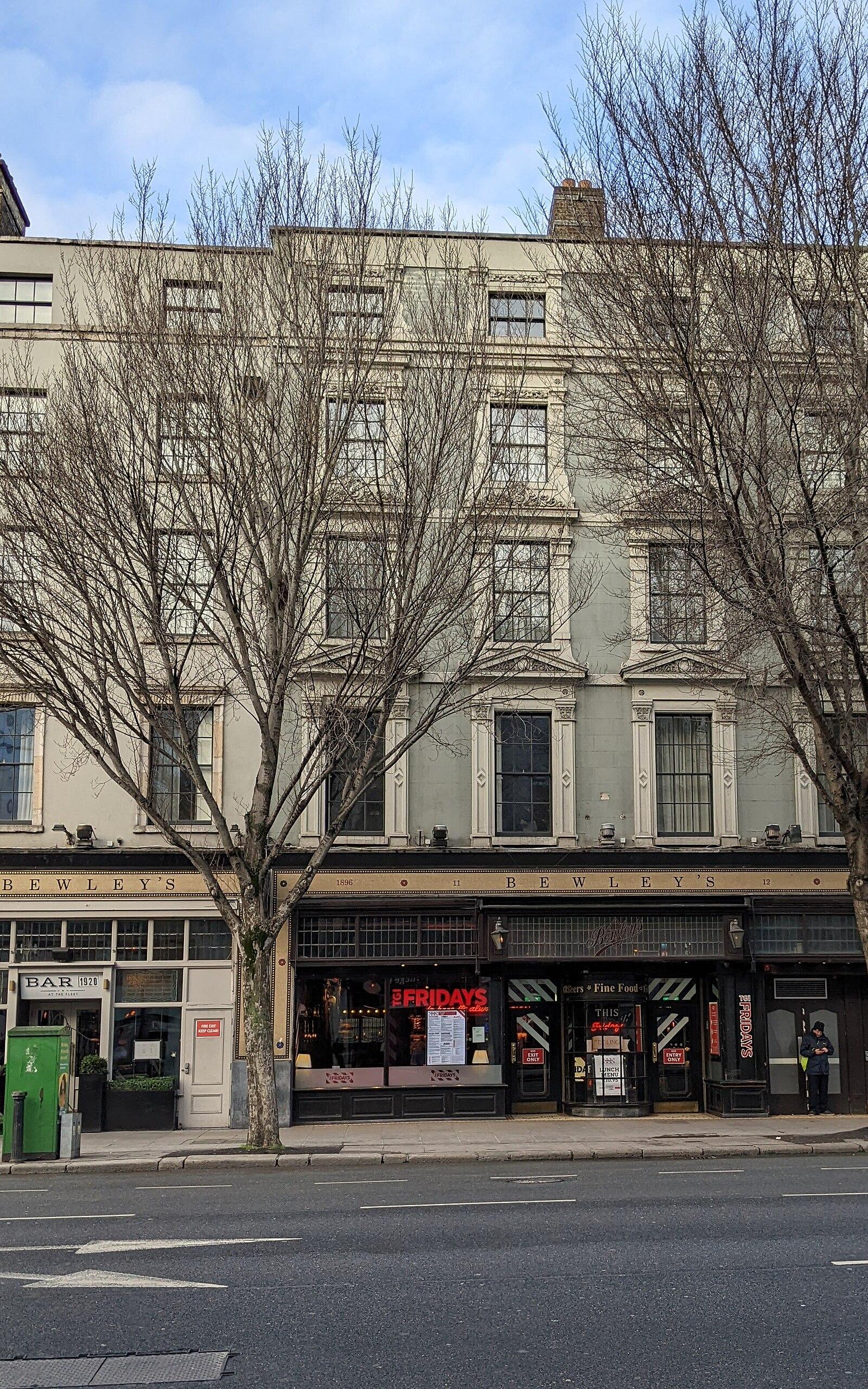
Walk two blocks along Randolph Street between Halsted and Morgan and you will spot it: the same address range posted twice on corner poles, one sign sun-bleached to near-illegibility, the other freshly installed and angled the wrong direction. It is a small thing, until it is not, when a delivery driver misses a restaurant entrance, when emergency services lose forty seconds at an intersection, when a new resident from out of state cannot reconcile the mapping app with what the pole actually says.
Chicago's Department of Transportation acknowledged in its fiscal year 2025 capital infrastructure report that the city carried a verified backlog of roughly 11,400 duplicate or conflicting street signs citywide, a figure that includes double-mounted panels, contradictory parking designations, and legacy ceremonial co-names that were never removed after the primary sign was updated. The West Loop, bounded roughly by the Chicago River to the north, Ashland Avenue to the west, the Eisenhower Expressway to the south, and the Loop's western edge, accounts for a disproportionate share of that count, according to the Near West Side Community Development Corporation, which has flagged the issue in annual neighborhood infrastructure surveys since 2022.
Why This Is Landing on Desks Right Now
The timing matters. The city is deep into pre-planning for infrastructure upgrades tied to the 2026 FIFA World Cup, with Soldier Field and its surrounding transit corridors designated as high-visibility zones requiring legible, consistent wayfinding. The West Loop sits between the stadium corridor and the central business district. Confusing or duplicated signage on corridors like West Madison Street, South Halsted, and West Fulton Market is now a logistics issue with a deadline, not just a chronic nuisance.
Transport for London completed a comparable duplicate-signage audit across six inner boroughs in 2023 and cleared roughly 9,000 redundant panels within fourteen months, at an average unit cost of £340 per removal and replacement. Seoul's Urban Management Bureau ran a three-year standardization program that wrapped in 2024, using GPS-tagged inspection vehicles to flag conflicts before crews were deployed, cutting field labor costs by an estimated 28 percent compared to its prior manual process. Chicago has not yet deployed a GPS-based audit vehicle on a citywide basis, though the Department of Transportation piloted the approach on a six-block stretch of West Lake Street in the spring of 2025.
The West Loop Community Organization, which maintains an office on South Racine Avenue, began its own block-by-block signage inventory in March 2026, working with volunteers from the Illinois Institute of Technology's urban planning program. As of late June 2026, the group had documented 214 duplicate or conflicting sign installations between Ogden Avenue and the river. That is a neighborhood-scale count, not a citywide one, but it puts a granular number on what had previously been an impressionistic complaint.
What Other Cities Are Doing Differently
Amsterdam completed a full inner-city signage reconciliation in 2021 under its Openbare Ruimte program, using a centralized GIS database that flags any new installation conflicting with an existing record before a work order is approved. The practical effect is that duplicates are prevented at the permit stage, not corrected after the fact. Chicago's permitting system does not currently cross-reference new sign installations against existing inventory in real time, a gap that city engineers have noted in internal planning documents without yet proposing a funded fix.
In New York City, the Department of Transportation's Sign Shop on Pearson Place in Queens processes removals on a rolling basis tied to 311 complaint volume, which averaged roughly 1,200 duplicate-sign complaints per month citywide in 2024. Chicago's 311 system logged 3,400 sign-related complaints for all of 2025, a lower per-capita rate, though advocates argue that undercounting is likely given how many residents do not file formal reports.
For West Loop residents and business owners, the near-term practical step is direct: file a 311 report with a photograph and the specific pole ID number, which is stamped on most Chicago street sign poles at approximately five feet above grade. The West Loop Community Organization is also accepting submissions through its online inventory form, which feeds directly into the IIT planning team's GIS layer. The city has indicated it will prioritize the Fulton Market and West Randolph Street corridors for clearance before the end of August 2026, ahead of anticipated World Cup visitor traffic in the area.